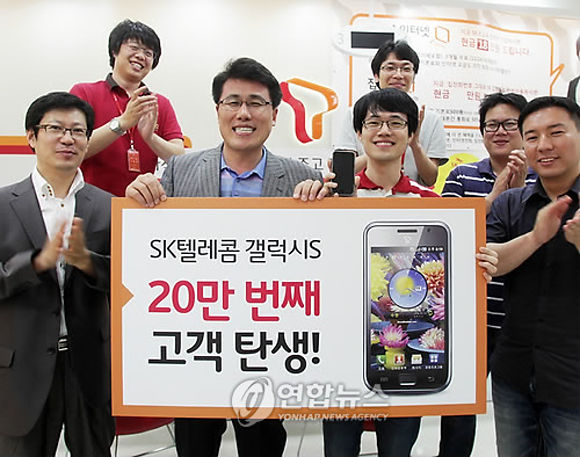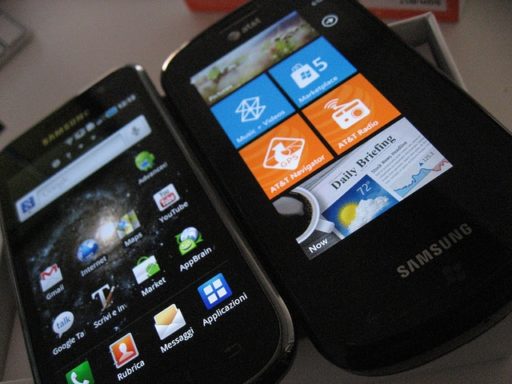
Samsung says it’s because the Galaxy S is better tailored to the South Korean market than some of its competitors, like, say the Apple iPhone 3GS.Samsung attributes this to the preloaded app package that serves South Koreans better than what the Apple offering comes with.
The Galaxy S smartphone is tailored to better cater to South Korean consumers, the company said, with pre-loaded applications from South Korean bookstores and portal Web sites.
The 9.9 millimeter-thin Galaxy S is powered by a 1-gigahertz Samsung chip and sports a sharper display visible in the sunlight.
Samsung hopes the Galaxy S model will help it gain a stronger footing in the lucrative smartphone segment.

Recent Tech News
Verizon Wireless brings a cell phone that is specially built for the travelers. The full QWERTY phone is global ready, i.e. ready to roam with you in over 200 countries. It is a great phone for frequent flyers who needs stay connected where ever they go. This phone is slim, lightweight design and can be carried easily. Other features include TXT/Email, Stereo Bluetooth support, 2MP camera and a large 2.4-inch screen.
Dell’s consumer products division is not doing well lately, because of competition from cheap entry-level products in emerging markets by other companies. The company’s earnings reduced by a factor of three. Its shares tumbled in extended trade. Its consumer unit is struggling to slow down the decline in sales. Overall, Dell is struggling. Now the company is planning to revamp its consumer unit with sales of new touchscreen laptops and tablets featuring Windows 8 OS.
The case between Oracle and Google has dragged on for a while. The court had to determine whether or not Google had used Java APIs in the Android software and that were such infringements covered under fair use. While the jury did agree to the former, it was unsure to the latter question. Now, though, the jury has come out with a decision and it is in favor of Google, ruling that Google didn’t infringe Oracle’s patents.
The hard drive industry has been shrinking rapidly. There have been acquisitions and mergers left, right and middle. One of the main reasons is that the a lot of storage is now going into the clouds, offered by alternate tech giants and the traditional hard drive big-wigs are having a hard trying to catch up. The latest in the list of acquisitions is Seagate’s intents of buying the hard drive vendor LaCie at $186 million.