An intriguing piece from TheNextWeb claims that HP’s WebOS tablet operating system runs significantly faster on the Apple iPad 2 compared to HP’s own Touchpad tablet and webOS operating system was running over twice as fast on its rival’s iPad 2 tablet. It may seem strange that the 1.2GHz chip inside the TouchPad was so easily outclassed by the slower clocked A5 and Apple’s chip is sporting faster Cortex-A9 architecture, while HP relied on Qualcomm’s slower A8-based Snapdragon……………
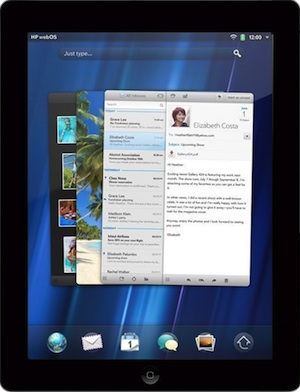
HP’s WebOS team almost certainly had an idea that the company’s new tablet, the TouchPad, had very little chance of challenging Apple’s dominance in the tablet market, as the company’s webOS operating system was running over twice as fast on its rival’s iPad 2 tablet, a source close to the subject revealed to The Next Web. With HP announcing it is to cease development of its webOS devices, TNW learned that before the HP’s TouchPad tablet and Pre smartphones were even released, everyone within the webOS team wanted them gone. The hardware reportedly stopped the team from innovating beyond certain points because it was slow and imposed constraints, which was highlighted when webOS was loaded on to Apple’s iPad device and found to run the platform significantly faster than the device for which it was originally developed. With a focus on web technologies, webOS could be deployed in the iPad’s Mobile Safari browser as a web-app; this produced similar results, with it running many times faster in the browser than it did on the TouchPad. When HP announced its acquisition of Palm, the computing giant had already built the TouchPad hardware that sits on the shelves. Basically, the TouchPad was a two-year old piece of hardware that the webOS team equipped with their tablet-friendly platform.
TNW‘s source also indicated that HP also had plans to release a 7-inch version of the TouchPad, the TouchPad Go. This was already in production and before yesterday was expected to launch in the coming months. It is unknown whether it will ever see a public launch now. The TouchPad Go was seen as a better looking and nicer feeling device that had the potential to sell, with it believed that sales of the device would outpace the TouchPad’s if it had been released before its larger cousin. TNW also heard that HP in fact already had the next generation of TouchPad in the works. The details are very fuzzy here but they believe that it would be a lighter model with a higher-resolution ‘retina’ display and a metal body. Nothing out of the ordinary if HP truly wanted to make a splash with its next potential offering. Because webOS is limited to working on the Qualcomm chipset, potential hardware partners would need to have a special version of webOS written for their hardware. This makes it hard to determine a likely licensee, but we know that HP has already been working on porting webOS to other architectures, including Apple’s A5 SoC.
With development stopping on future HP webOS devices, the webOS team face an uncertain future. HP has said it will license the platform, prompting suggestions that smartphone vendors including HTC and Samsung could look to the operating system given the recent developments between Google and Motorola. A reader of TNW, Joshua Tewell points out webOS has and continues to run on other chipsets besides Qualcomm’s. This supports the fact that webOS may have been adapted to other chipsets, but it makes the statement in the article above that webOS is ‘limited to working on the Qualcomm chipset’ inaccurate.
[ttjad keyword=”ipad”]