
Recently, Australian scientists have found a patch of giant sea-grass named ‘Posidonia Oceanica’, which is spanned more than 2,000 miles under the Mediterranean, on the way from Spain to Cyprus. As the scientists have tested the DNA (Deoxyribo Nucleic Acid) samples of these grass, they found these grass are minimum 100,000 years old. Definitely, ‘Posidonia Oceanica’ is going to be written in ‘Guinness World Records’ replacing the current known oldest living organism ‘Tasmanian’ plant which is around 43,000 years old.
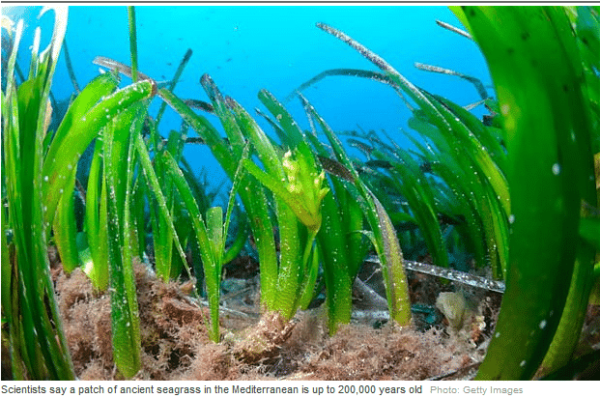
Among these 100,000 years old grass, some parts of this particular patch are up to 200,000 years old. Now, scientists from the University of Western Australia administered are studying on the sea-grass. As a matter of fact, these grasses can grow in massive clumps and can continuously grow new branches and expand. Therefore, theses grasses are known or named as ‘Neptune Grass’ or ‘Mediterranean Tapeweed’. Surprisingly, the seagrass reproduces asexually by cloning. Not only that, if any particular area depletes, in order to exist they spread far and wide.
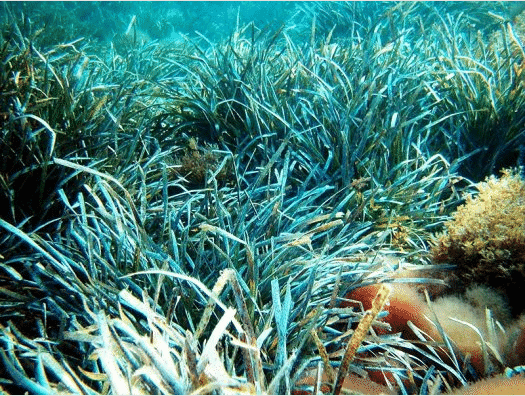
Prof Carlos Duarte, from the University of Western Australia said, “They are continually producing new branches. They spread very slowly and cover a very large area giving them more area to mine resources. They can then store nutrients within their very large branches during bad conditions for growth. The seagrass has been able to reach such old age because it can reproduce asexually and generate clones of itself. Organisms that can only reproduce sexually are inevitably lost at each generation.”
Each separate patches of the seagrass is weigh more than 6,000 tons and it can span in the Mediterranean almost 10 miles. To be noted that, though Neptune Grass (Posidonia Oceanica) have been found in the Caribbean, but it is most common in the Mediterranean. The bad news is this, due to sea temperatures and development, this world’s oldest living organism is going to be in danger in future.
Source : The Telegraph, PopSci
[ttjad]