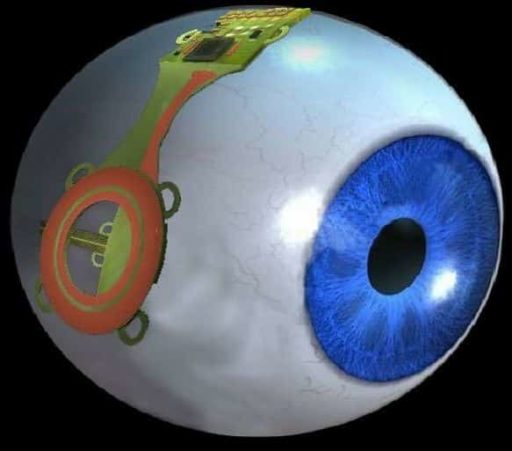
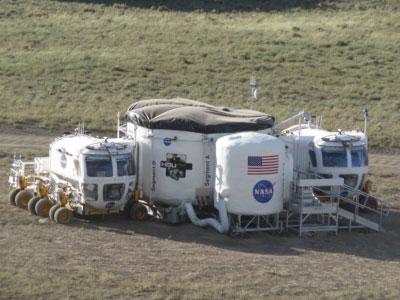
Recon Instruments gets NASA Desert RATS eyes-on with Micro Optics Display and Recon Instruments has partnered with NASA Desert Research and Technology Studies to test two variants of its GPS-enabled Micro Optics Display for use in next-generation spacesuits, and get our space agency a wee bit closer to the P.K. Dick fantasy. The 2011 Desert RATS test is simulating a mission to an asteroid using prototype rovers, habitat mockups and a humanoid robot identical to the one currently living on board the International Space Station……………..
Recon Instruments‘ customized solution for NASA‘s annual field testing provided an eye-widening experience for the testers involved. Recon Instruments is the multiple award-winning Vancouver-based technology company behind the world’s first GPS enabled Micro Optics Displays for alpine goggles. This technology served as the starting point for two customized versions that were evaluated at NASA Desert Research and Technology Studies (Desert RATS) in the Arizona desert. The technology was tested by several subjects, including astronaut and engineering specialists who evaluated the goggles paying particular attention to how well the Micro Optics Display conveyed information. Currently, spacewalking astronauts rely on a paper checklist worn on the arm, or from voice command from within the vehicle or ground control. Recon‘s technology was loaded with procedures that guided the subjects through a complex task that was representative of an experiment that might be deployed on the Moon or Mars. The technology was warmly received by the testers in this early evaluation, with the demonstration showing the technology being successful in delivering the correct information in a clear and succinct manner, direct-to-eye. “Recon Instruments’ display technology goggles allowed NASA to evaluate a potential option for displaying information to an astronaut wearing a spacesuit. The goggles were evaluated using simulated procedures and hardware mock-ups typical of expected EVA tasks. We learned that this display worked quite well in conveying information needed by the astronauts to perform complex tasks. We will continue to investigate this and other kinds of display technology in the future.” said Michael Lewis, who is the engineer in charge of developing Helmet Mounted Displays for NASA‘s future spacesuit. Dan Eisenhardt, CEO of Recon Instruments added “We are delighted that our technology was received well by the specialists at Desert RATS and successfully provided information direct-to-eye. We look forward to exploring this technology further with NASA as it proceeds with development of the next generation spacesuit. Skiers and snowboarders can get their hands on this Micro Optics Display technology this fall and will be able to put it to the test themselves on the snow.”
[ttjad keyword=”general”]