NASA is providing seed money to U.S.-based companies in the hope that they will develop the first commercial launch vehicles and spacecraft capable of carrying astronauts into low-Earth orbit as part of its Commercial Crew Development (CCDev2) initiative.
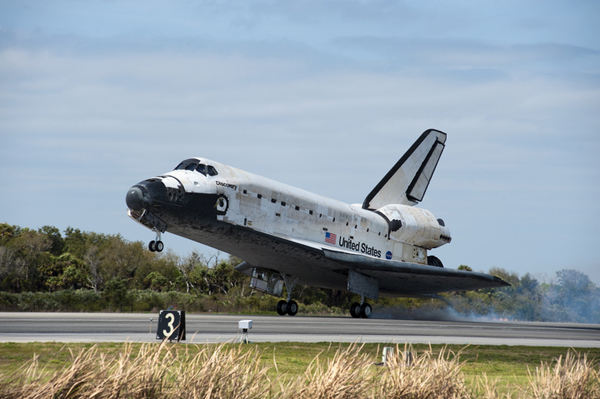
Boeing Co. garnered the largest of four NASA Space Act Agreement awards designed to nurture the development of commercially operated astronaut transport systems, landing a deal worth $92.3 million to refine the design of its CST-100 crew capsule, the U.S. space agency announced April 18.
The Commercial Crew Development program, which began in 2009, is arguably one of the most important efforts under way at NASA. Its goal is to help U.S. private enterprises develop the capability to transport U.S. astronauts to space. Until those spaceships are ready, astronauts will tag along on Russian spacecraft to get to the International Space Station (ISS). The agency recently inked a $753 million deal with Russia that will allow astronauts to take 12 round trips to the ISS between 2014 and 2016.
“We’re committed to safely transporting U.S. astronauts on American-made spacecraft and ending the outsourcing of this work to foreign governments,” NASA Administrator Charles Bolden said in a prepared statement. “These agreements are significant milestones in NASA’s plans to take advantage of American ingenuity to get to low-Earth orbit, so we can concentrate our resources on deep space exploration.”
Ed Mango, manager of NASA’s commercial crew program, said in a statement that the space agency will support the development of multiple U.S. astronaut transport systems that will be available to government and commercial customers.
In a press release, Boeing said it would use the CCDev 2 funding to reduce risk on its Crew Space Transportation (CST) -100 capsule. “We are combining lessons learned and best practices from commercial airplanes, satellites and launch systems with those from human spaceflight programs such as the space shuttle and the International Space Station to design, deliver and fly the CST-100 in 2015,” John Elbon, vice president and program manager, Boeing Commercial Crew Programs, said in a prepared statement.
[ttjad keyword=”general”]