
Scientists may be closing in on the age-old goal of finding a cure for the common cold, and other forms of influenza. Scientists at Mount Sinai School of Medicine in New York have discovered a method of stopping the spread of influenza viruses by stopping the genetic process by which the virus replicates itself. They can essentially flip a switch that stops the virus RNA in its tracks.
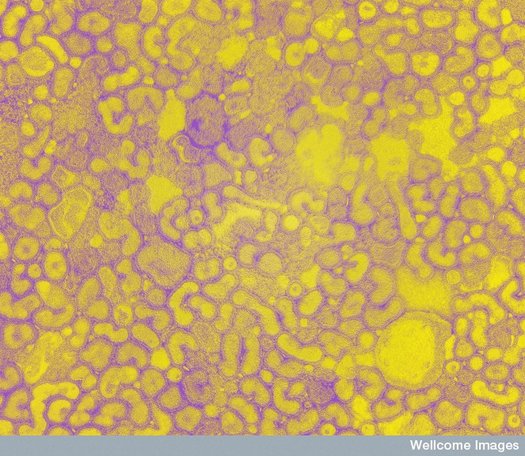
The influenza A virus contains eight individual single-stranded RNA segments, each of which has to make protein as well as new segments, in processes called transcription and replication. The multitasking strands must prioritize their work, so they must start with transcription and move on to replication.
Using a novel process called deep sequencing, the team found a small viral RNA segment, or svRNA, that is integral to the change. Inhibiting the svRNA from doing its work stymies replication, and therefore slows the spread of the virus.
Even better, influenza A shares this trait with its viral cousins, influenza B and C, meaning the svRNA switch can be used to stop all kinds of flu — even the H1N1 flu. As an added bonus, if the virus is prevented from replicating, it stays in transcription mode and produces more proteins. This helps the body’s immune system build up its defenses, according to Benjamin tenOever, an assistant microbiology professor at Mount Sinai and a study author.
The process used to make this discovery is also groundbreaking, the researchers say. The deep sequencing allowed the scientists to obtain millions of small RNAs from cells in an unbiased fashion, according to a Mount Sinai release.
The next step is to find a way to introduce RNA “antagonists” to inhibit the svRNA’s switch function, tenOever says. That’s still a long way off, but the knowledge that RNA can be switched off means that a universal flu treatment is a possibility.
Source: Popular Science.

Pingback: Tweets that mention Scientists Make Huge Leap Toward Finding A Cure For Common Cold And Other Flu | TheTechJournal.com -- Topsy.com
Pingback: The Search For A Common Cold Cure Continues | World University Information