
It’s a new tablet PC by Marvell.OLPC announced a partnership with Marvell to use its Moby $99 tablet platform for its upcoming XO tablet computers.Let’s see what we can see in 2011….??
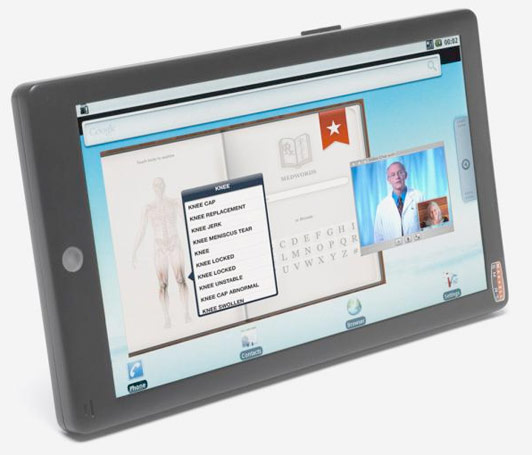

 Eh, those kiddos don’t need no physical keyboards and power cranks, right? Right! In a presumed effort to both keep with the times and take advantage of what’s being served to them on a silver platter, the philanthropic souls over at One Laptop Per Child have teamed with Marvell in order to develop the next OLPC — which, predictably, will be a tablet.
Another six months, another change of perspective for the OLPC (One Laptop Per Child) non-profit organization which has today officially announced a partnership with Marvell to use its Moby $99 tablet platform for its upcoming XO tablet computers.
The forthcoming range of XO tablets will be based on Marvell’s newly loosed ‘Moby’ reference design (which we recently toyed with), and given that purported $99 price tag, you can see why the tie-up makes sense. The slate will require but one watt of power to operate (compared to ~five watts on the existing XO laptop), and it’ll include a multilingual soft keyboard with touch feedback in order to serve various regions of the globe. As for specs, we’re told that the device will boast an ARMADA 610 application processor, “gigahertz processor speed,” 1080p encode / decode capabilities, 802.11n WiFi, Bluetooth, FM radio support, a GPS module and the ability to play back 3D graphics and Adobe Flash videos (zing!).
“While devices like eReaders and current tablets are terrific literary, media and entertainment platforms, they don’t meet the needs of an educational model based on making things, versus just consuming them. Today’s learning environments require robust platforms for computation, content creation and experimentation – and all that at a very low cost,” said Dr. Nicholas Negroponte, Founder and Chairman of One Laptop per Child. “Through our partnership with Marvell, OLPC will continue our focus on designing computers that enable children in the developing world to learn through collaboration, as well as providing connectivity to the world’s body of knowledge.”
There’s also an integrated camera for live video conferencing, not to mention Moby’s ability to support Android, Windows Mobile and / or Ubuntu.
However, OLPC News reports that the “all variants” of the XO-3 Moby tablet are slated to run the Sugar Learning Platform by default, although GNOME will also be an option via a dual desktop setup.
All we’re told about battery life is that it’s designed “expressly” to last a good, long while, and scarily enough, there’s no confirmation anywhere that these will actually cost less than a Benjamin whenever they ship. Fingers crossed, though.
Below you can see an early prototype of a Moby tablet while further down is a rendering of the ‘former’ XO-3, the one imagined for 2012. Quite the difference right?
Resources :tgdaily.com,tcmagazine.com,engadget.com
Pingback: http://%/bvyhrdt4