
Every once in a while, scientists reveal a study that makes us ordinary people scratch our heads and go “Duh!” It makes us wonder why these learned people spend so much time and money to come up with things everyone knew all along! Here is a collection of the best of such “Duh” moments from the year 2010 in science.
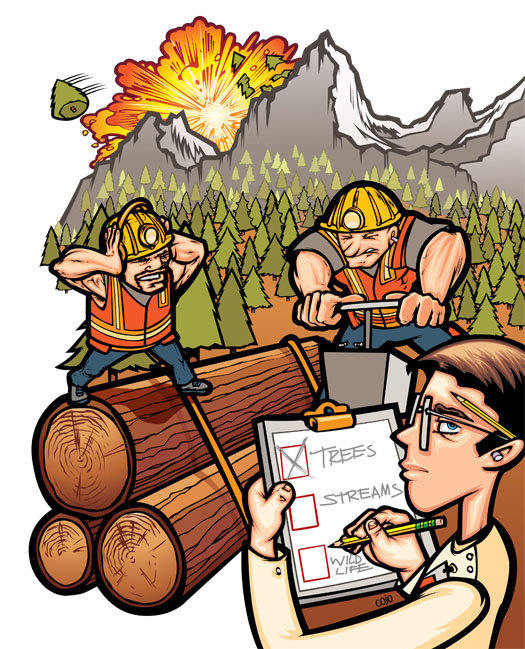
Blowing Up Mountains Is Bad for the Environment
Cojo
The Study
“Mountaintop Mining Consequences,” Science, January 2010
The Findings
One of the most popular mining techniques in Appalachia has been cutting down the trees on top of mountains and blasting the peaks off to get to the buried coal. It doesn’t take a doctorate to see that mountaintop mining (MTM) is bad for the environment, but until Margaret Palmer of the University of Maryland and her colleagues collected the data, no one knew just how bad it was. Their analysis shows that the technique has led to downstream flooding and toxic levels of selenium in West Virginia streams, that the blast dust can cause respiratory problems, and that reclaiming the mined areas by planting grass doesn’t appear to work.
Why Bother?
Last summer, the Obama administration inked a plan that adds more regulation but allows the practice to keep expanding. Palmer hopes her paper gives policymakers a clear rundown of the potential consequences. “MTM permits should not be granted unless new methods can be subjected to rigorous peer review and shown to remedy these problems,” she writes. “Regulators should no longer ignore rigorous science.”
-
Old People Prefer Happy Memories
Cojo
The Study
“There Are Age-Related Changes in Neural Connectivity during the Encoding of Positive, but Not Negative, Information,” Cortex, May 2009
The Findings
An international team of psychologists put a group of people aged 19 through 31 and a group aged 61 through 80 into a functional MRI and showed participants positive, neutral and negative photographs. It turned out that the brains of younger and older people responded similarly when they saw gunshot wounds, but for the older people, their ventromedial prefrontal cortex and amygdala, which are involved in emotion, and the hippocampus, which governs memory, all responded when they saw positive images like kittens, indicating the formation of a stronger memory. (The younger brains showed no such effect.) The researchers think this may explain the “positivity effect,” the idea that as people age, positive memories tend to get stronger while bad memories fade more quickly.
Why Bother?
We’re not sure exactly why older folks look on the bright side, but before this study we weren’t even sure if there was a biological basis for the phenomenon. The next step is to establish whether the positivity effect is simply a part of aging or whether, as older adults feel time slipping away, they are more likely to emphasize the positive. This could help determine if there are differences in the memory encoding between elderly people with depression and those with a cheerier disposition.
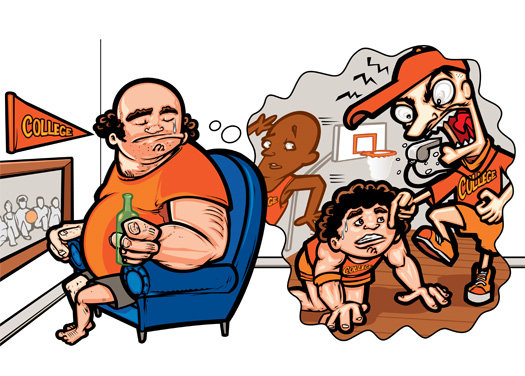
A Mean Gym Teacher Can Turn You Off Sports
Cojo
The Study
“Remembering Instructors: Play, Pain and Pedagogy,” Qualitative Research in Sport and Exercise, November 2009
The Findings
The sadistic gym teacher who belittles students for their sissy push-ups is a sitcom cliché, and it’s reasonable to think that someone who hated gym class in middle school might not be a gym rat in later life. William Strean of the University of Alberta nonetheless interviewed 24 subjects to see how influential their gym teachers had been on their later attitudes toward exercise. He found a strong correlation between people who were turned off to physical activity and bad personal experiences with aggressive gym teachers.
Why Bother?
By some estimates, as many as 70 percent of children drop out of team sports, many because of negative events like being hit, called names, or pressured to play while injured. Strean’s research was intended to determine what aspects of physical activity kids consider positive and negative. As it happens, instructors play a large part. “Although it may seem obvious that negative experiences may turn people off future physical-activity opportunities, it is apparently not always so evident to teachers and coaches that they have such an impact,” Strean says. “It’s important that educators realize that a few of their words can build someone’s spirit or crush it like a bug.”
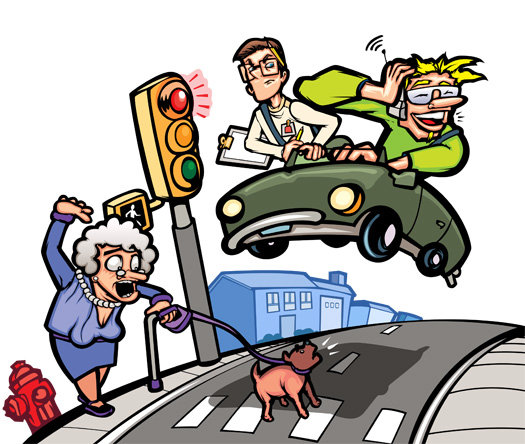
Most People Drive Poorly while Talking on the Phone
Cojo
The Study
“Supertaskers: Profiles in Extraordinary Multi-tasking Ability,” Psychonomic Bulletin & Review, Pending
The Findings
Common sense—and plenty of dented bumpers—tells us that driving and cellphones don’t mix. Jason M. Watson and David L. Strayer of the University of Utah had heard that this applies more to some people than others, but previous studies had failed to distinguish between the two groups. That’s why Watson and Strayer observed 200 volunteers in a driving simulator who were tasked with simultaneously memorizing word sequences and doing math problems while following a lead vehicle. As you’d expect, 97.5 percent of people failed at least one task miserably. But a surprising 2.5 percent appeared to be “supertaskers,” people who can do two tasks at once as competently as they perform a single task.
Why Bother?
Identifying and studying the rare supertaskers among us helps scientists better understand how the brain works. “We didn’t expect anyone to be able to juggle these two goals at once,” Watson explains. “A lot of cognitive theory says [supertaskers] shouldn’t exist.” But since they do, Watson hopes to learn more about the biological basis of their rare gift. He also believes that finding these people could help in fast-tracking them into jobs that involve multitasking, such as flying fighter jets.
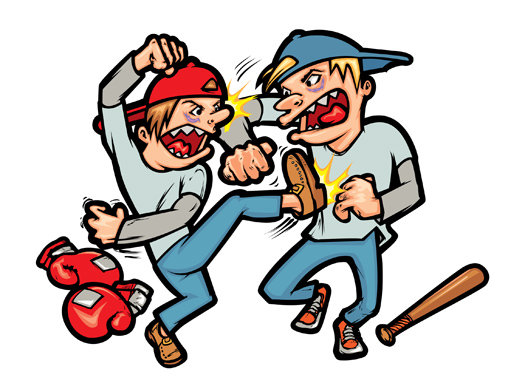
Siblings Who Fight Don’t Get Along
Cojo<
The Study
‘‘ ‘Who Said You Could Wear My Sweater?’ Adolescent Siblings’ Conflicts and Associations with Relationship Quality,” Child Development, March/April 2010
The Findings
Fighting in the backseat seems natural enough, but it turns out that sibling conflict can have a truly negative effect on relationships. Nicole Campione-Barr of the University of Missouri and Judith G. Smetana of the University of Rochester interviewed 115 pairs of siblings between the ages of 8 and 20, assessing their relationship quality and conflict ratio. While what the study calls “equality and fairness” conflicts—spats over things like who operates the TV remote—didn’t seem to be a big deal, personal-space conflicts, like hanging around when big sis has her friends over, indicate a lack of trust and communication between siblings and negatively affected the quality of siblings’ relationships.
Why Bother?
Campione-Barr hopes that looking at these sibling conflicts will illuminate whether they play a role in depression, anxiety and self-esteem.
Young People Want Big Money, Big Vacations
Cojo
The Study
“Generational Differences in Work Values: Leisure and Extrinsic Values Increasing, Social and Intrinsic Values Decreasing,” Journal of Management, March 2010
The Findings
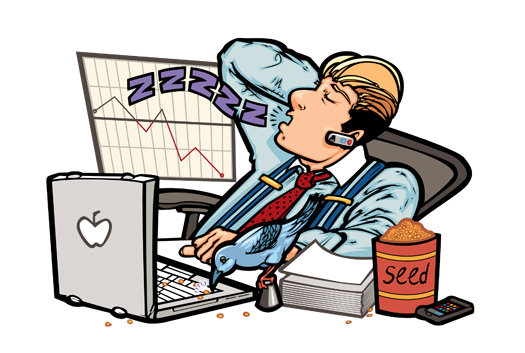
Companies are trying to change their management style to satisfy Generation Y by offering such perks as on-site laundry and five weeks of vacation right off the bat. The problem is, there’s very little information on what Gen Y—defined in this study as people born after 1981—are actually looking for. Jean Twenge of San Diego State University and her collaborators examined the Monitoring the Future survey, which has been given to high-school seniors since 1976. They determined the work values of baby boomers, Gen Xers and Gen Y. The result? Gen Y, also known as “GenMe,” is less work-oriented and places a higher value on leisure time than their predecessors, but they still covet the fat paycheck. Kids these days. “The combination of not wanting to work hard but still wanting more money and status verifies the sense of entitlement many have identified among GenMe,” Twenge writes.
Why Bother?
With 75 million boomers on the verge of retirement, it’s Gen Y that will be stoking the GDP over the next few decades. Motivating this group of workers will be key to the economic health of the country.
Environmentalists Can Be Smug Jerks
CojoThe Study
“Do Green Products Make Us Better People?” Psychological Science, March 2010
The Findings
Sure, getting organic bok choy and phosphate-free toilet-bowl cleaner can make you feel good about yourself, but how good? And does buying green translate into more redeeming behavior overall? Nina Mazar and Chen-Bo Zhong of the University of Toronto conducted three experiments on 305 subjects to find out. It turns out that just being exposed to green products—seeing a TV commercial or walking by an organic store—creates a “halo effect” that makes people more charitable and trusting. But actually buying green products was like getting a license for hypocrisy: After a purchase, the green consumers were more likely to lie and steal.
Why Bother?
Mazar points out that more and more consumers are buying green and socially responsible products, which gives them “moral capital” (a.k.a. a superiority complex). But, she says, she wants to learn how to get beyond the smug factor: “How do we educate kids to get to the stage of being more thoughtful about using resources without thinking ‘I’m so great’? This is ultimately the goal of our research.”

Self-Control Makes Students More Manageable
CojoThe Study
“Intervention to Strengthen Emotional Self-Regulation in Children with Emerging Mental Health Problems: Proximal Impact on School Behavior,” Journal of Abnormal Child Psychology, July 2010
The Findings
An inability to regulate emotions in childhood—throwing temper tantrums or acting up in class—often forecasts serious psychological problems like depression later in life. That’s why, as part of the Rochester Resilience Project, a school-based mentorship program, a research group from the University of Rochester and the University of Miami decided to teach 226 kids ranging from kindergartners to third-graders new methods for improving emotional regulation. During 14 weekly lessons, mentors taught the children self-control skills, including breathing techniques to control emotions and self-monitoring of emotions to help the kids stop and think before making that fart noise. The intervention reduced disciplinary actions against the participants, such as being sent to the principal’s office, by 46 percent, and it helped improve girls’ social skills, such as making friends. (Boys’ social skills remained unchanged.)
Why Bother?
Only about one in eight children with behavioral disorders ever receives treatment. In-school programs like the Rochester Resilience Project are some of the best strategies to reach these kids, and they can reduce the types of bad classroom behavior that can disrupt learning for other students.
Source: Popular Science.


