
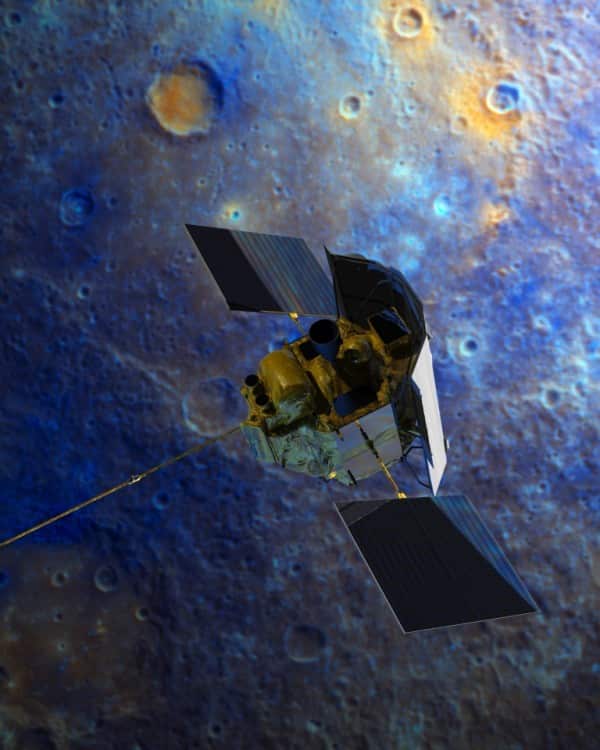
On August 3, 2004, NASA launched a robotic spacecraft that will orbit the closest planet to the Sun and the eighth largest planet of the solar system, Mercury. Can you remember, what was the name of that space craft? It’s MESSENGER (an acronym of MErcury Surface, Space ENvironment, GEochemistry and Ranging). However, MESSENGER successfully entered Mercury’s orbit on March 18, 2011 and since then it has been studying the planet’s chemical composition, geology, and magnetic field. Recently, MESSENGER has revealed the chemical diversity on Mercury’s surface.
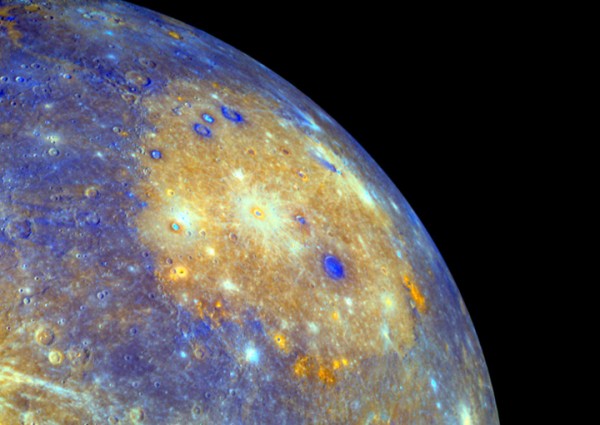
Mercury orbiter MESSENGER is equipped with X-Ray Spectrometer (XRS) through which it can measure the chemical diversity on Mercury’s surface. Shoshana Zoe Weider of the Carnegie Institution of Washington and some other scientists have observed Mercury’s Surface by analyzing 205 measurements of the surface composition via MESSENGER’s X-Ray Spectrometer. In general, the measurements show that Mercury’s surface composition is very different from that of other planets in the solar system. The planet (Mercury) has very high amount of magnesium and sulfur (10 times than on earth). This composition is similar to that expected from partial melts of enstatite chondrites, a rare type of meteorite that formed at high temperatures in highly reducing (low oxygen) conditions in the inner solar system.
Shoshana Zoe Weider said, “The X-ray spectrometer focuses on the estimation of elemental abundances on Mercury; i.e., the amount of magnesium, aluminum, sulfur, calcium, and iron in surface material. From there we can start to work out what kinds of minerals are present, then the types of rocks that were formed, and then we can start to unravel the geological history. The new findings further illuminate the geological history of the planet. We now know that these areas are compositionally distinct, indicating that different parts of Mercury’s mantle melted at different times and temperatures, and through volcanic activity created the materials in the different terrains. None of the other terrestrial planets have such high levels of sulfur. We are seeing about ten times the amount of sulfur than on Earth and Mars. In terms of magnesium, we do have some materials on Earth that are high in magnesium. They tend to be ancient volcanic rocks that formed from very hot lavas. So this composition on Mercury tells us that eruptions of high-temperature lavas might have formed these high-magnesium materials. Now we can correlate their findings with our data, providing increased confidence in what we are discovering about the planet.”
The results have been published in the Journal of Geophysical Research.
Source : NASA
[ttjad keyword=”best-selling-gadget”]


Here’s the brutal truth: the majority of HVAC failures occur because someone ignored a step. Did not calculate the load correctly. Used undersized equipment. Misjudged the insulation needs. We have fixed hundreds of these disasters. And every time, we file away another insight. Like in 2017, when we began adding remote monitoring to every system. Why? Because Sarah, our senior tech, got sick of watching homeowners burn money on poor temperature management. Now clients save $500+ yearly.
https://www.zeemaps.com/map/ofcle?group=6962440
Here’s the harsh truth: the majority of HVAC failures happen because someone ignored a step. Did not calculate the load accurately. Used incorrect equipment. Got wrong the insulation needs. We’ve fixed hundreds of these disasters. And every time, we remember another learning. Like in 2017, when we started adding remote monitoring to each installation. Why? Because Sarah, our master tech, got sick of watching homeowners lose money on inefficient temperature management. Now clients save 20-30% yearly.
https://www.slideshare.net/productairheating?tab=about
Let me tell you something the majority of septic companies will not: there are two categories of people in this life. Those who think septic systems are merely “subterranean tanks for waste,” and those that have had raw sewage bubbling into their backyard at the dead of night. I understood this reality the hard way in 2005—standing in muck, trembling in a Washington rainstorm, as my family and I assisted a weathered installer repair our family’s collapsed system. I was fourteen. My hands were raw. My jeans were destroyed. But that moment, something clicked: This isn’t just digging. It’s people’s lives we’re preserving.
This is the ugly truth: most septic companies just service tanks. They’re like quick-fix salesmen at a chainsaw convention. But Septic Solutions? They are special. It all originated back in the beginning of the 2000s when Art and his family—just kids scarcely tall enough to shoulder a shovel—assisted install their family’s septic system alongside a grizzled pro. Picture this: three kids knee-deep in Pennsylvania clay, understanding how soil permeability affects drainage while their peers played Xbox. “We didn’t just dig holes,” Art told me last winter, steaming coffee cup in hand. “We discovered how earth whispers mysteries. A patch of cattails here? That’s Mother Nature screaming ‘high water table.'”
https://vocal.media/authors/septic-solutions-llc
I need to explain something nearly all septic companies won’t: there are two types of people in this life. Those who assume septic systems are merely “buried containers for waste,” and those that have had raw sewage bubbling into their backyard at midnight. I discovered this difference the tough way in 2005—knee-deep in sludge, shivering in a Washington rainstorm, as my family and I assisted a weathered installer restore our family’s collapsed system. I was fourteen. My hands ached. My clothes were wrecked. But that evening, something crystallized: This isn’t just digging. It’s folks’ lives we’re protecting.
Let me share the ugly truth: nearly all septic companies just maintain tanks. They act like quick-fix salesmen at a disaster convention. But Septic Solutions? They’re unique. It all began back in the beginning of the 2000s when Art and his brothers—just kids hardly tall enough to shoulder a shovel—helped install their family’s septic system alongside a grizzled pro. Picture this: three pre-teens waist-deep in Pennsylvania clay, learning how soil permeability affects drainage while their peers played Xbox. “We did not just dig holes,” Art explained to me last winter, warm coffee cup in hand. “We understood how ground whispers secrets. A patch of wetland vegetation here? That’s Mother Nature screaming ‘high water table.'”
https://vocal.media/authors/septic-solutions-llc
Чайная церемония – это древнее искусство, зародившееся РЅР° Востоке тысячи лет назад. Р’СЃРµ действия мастера наполнено глубоким смыслом, Р° приготовление чая превращается РІ философский акт. Ключевое значение РІ церемонии играет температура РІРѕРґС‹, ведь даже малейшая деталь влияет РЅР° РІРєСѓСЃ. Гости Рё С…РѕР·СЏРёРЅ забывают Рѕ суете РґРЅСЏ, чувствуя тонкий аромат тщательно отобранных листьев. Сегодня чайные церемонии обретают РЅРѕРІСѓСЋ популярность как возможность отдохнуть РѕС‚ стресса РІ современном темпе.https://kudago.com/spb/event/raznoe-chajnyie-tseremonii-v-art-of-tea/
РљРѕРЅРєСѓСЂСЃ «Малый бизнес – Большие возможности» – официальное признание лучших предпринимателей Северной столицы. Каждый РіРѕРґ Р·Р° звание лучших борются предприниматели РёР· десятков отраслей – РѕС‚ сферы услуг РґРѕ производства. Стать номинантом – значит подтвердить, что ваш бизнес – это всерьёз Рё надолго. Диплом победителя открывает двери Рє новым партнёрствам, Р° история участия РІ РєРѕРЅРєСѓСЂСЃРµ РіРѕРІРѕСЂРёС‚ Рѕ компании больше, чем любая реклама. Сделайте шаг – пусть Петербург услышит вашу историю успеха https://moika78.ru/news/2025-07-10/1164183-bank-sankt-peterburg-schitaet-malyj-biznes-iskusstvom-i-gotov-podderzhivat/
I used to underestimate the power of uniforms, until one incident in a retail store opened my eyes. Staff in neat, tidy uniforms instantly projected an air of confidence — and this sense of unity was obvious. The point wasn’t the embroidered names, but rather the overall atmosphere the uniform created. It was then I understood: workwear means not just the image, but the internal atmosphere as well. There’s a famous quote by Paul Rand: “Design is the silent ambassador of your brand.” Workwear functions exactly the same way: it broadcasts values without making a sound. People respond to these non-verbal signs: we judge a company by its employees instantly. But the impact isn’t limited to the outside world: the uniform influences the staff’s self-perception. I’ve seen companies where the introduction of thoughtful workwear unexpectedly improved the team atmosphere. Employees start to feel part of a larger system, and this is inspiring. This consistency and professionalism provides an internal impulse that remains unseen but works flawlessly. I am convinced: the right uniform can transform relationships https://www.pexels.com/@maude-hill-2159369846/.
В ситуации, когда запой затянулся, самое верное решение — вызвать нарколога на дом. Частные клиники на Васильевском и других районах, обеспечивающие анонимное лечение на дому.
Почему люди выбирают именно этот формат — возможность решить проблему без огласки. Рто особенно важно для людей публичных профессий или госслужащих. Конфиденциальность гарантируется РґРѕРіРѕРІРѕСЂРѕРј.
Выездная бригада проводит на месте: купирование похмельного синдрома и стабилизацию давления. Медикаменты подбираются индивидуально под пациента. Если пациент в сознании и адекватен родственникам дают рекомендации по уходу.
Для многих важен и психологический аспект. Квалифицированный нарколог объясняет близким: куда обращаться дальше.
Полноценное лечение требует комплексного подхода. Дальше начинается самый важный этап — работа с психологом и реабилитация. В городе работают центры с палатами разных категорий.
Лучше иметь контакты под рукой до критической ситуации. Помощь придёт независимо от времени суток. Своевременный вызов нарколога может спасти от инфаркта или инсульта. https://beztravmy.ru/sustavy/pervyj-shag-k-vyzdorovleniyu-vyzov-narkologa-na-dom.html