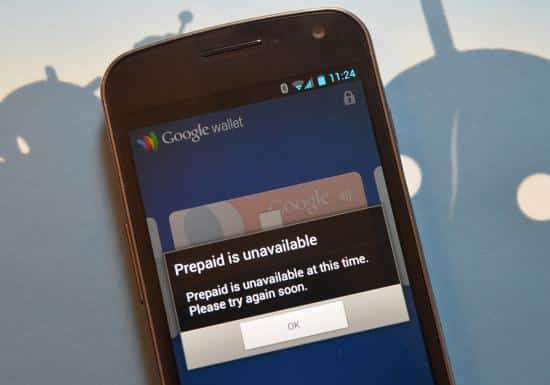
Following the discovery of two major security loopholes that worried the Android community, Google decided to disable the access to provisioning prepaid cards to Google Wallet until the issue is fixed. Despite Google’s intense communication about the multiple levels of protection that Google Wallet delivers, Android Central explained that the newly discovered security flaw could reset Google Wallet PIN and grant unwelcomed access prepaid cards.
Previously, it was discovered that rooted Android phones could be “vulnerable to brute force crack.” However, Google places some of the blame on users and warns them that rooted phones are not as safe as un-rooted devices. “Google Wallet is protected by a PIN — as well as the phone’s lock screen, if a user sets that option. But sometimes users choose to disable important security mechanisms in order to gain system-level “root” access to their phone; We strongly discourage [rooting] if you plan to use Google Wallet because the product is not supported on rooted phones,” said an official statement.
Nevertheless, the Mountain View company takes some decisive steps to provide more protection to Google Wallet users who are vulnerable if they lose the phone and an unauthorized person gains access to the prepaid cards. “Tonight we temporarily disabled provisioning of prepaid cards. We took this step as a precaution until we issue a permanent fix soon,” announced Osama Bedier, Vice President, Google Wallet and Payments on Friday.