The Facebook Like button is one of the most successful button created for social sharing and has been implemented on several thousands website. The social network on Monday announced a new “Send” button that allows users to share directly with individuals and select friends via Messages, email or within “Groups” of friends.
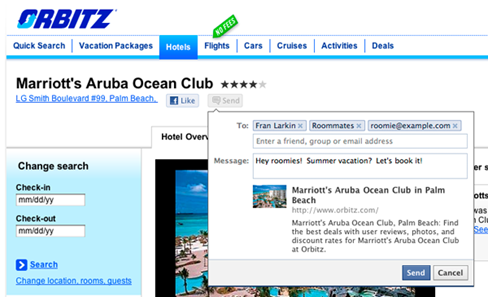
The “Send” button is similar to the “Like” button, that enables people to share a web site with all their friends. Except with the “Send” button, people can share with a smaller group of people. They can choose a group–such as Roommates, Family, or Soccer Team.
The ability to only share items that are relevant to people should be welcome for those who don’t care about their friends’ every single move online. In Facebook’s example, you can share a trip idea from Orbitz.com with your roommates with one click.
The Send button adds to a growing list of Facebook social plugins which are taking the web by storm. Facebook had introduced Facebook Messaging back in November as an alternative to traditional email by providing users with an @facebook.com email address. The service is currently being gradually rolled out and it looks like this would give people a good reason to start using Facebook messaging to share content with others.
Users can start implementing the Send button on their website similarly to the like button. You can get the code for the Facebook Send button by visiting this page.
[ttjad keyword=”general”]